
Comparison between Sacha Inchi Oil and Fish Oil
A comparative reference on Sacha Inchi oil and fish oil, covering the supply process, oil-obtaining process, component comparison and conclusion.
Sacha Inchi oil Fish oil Omega 3 Oil process Supply process Fatty acid comparison
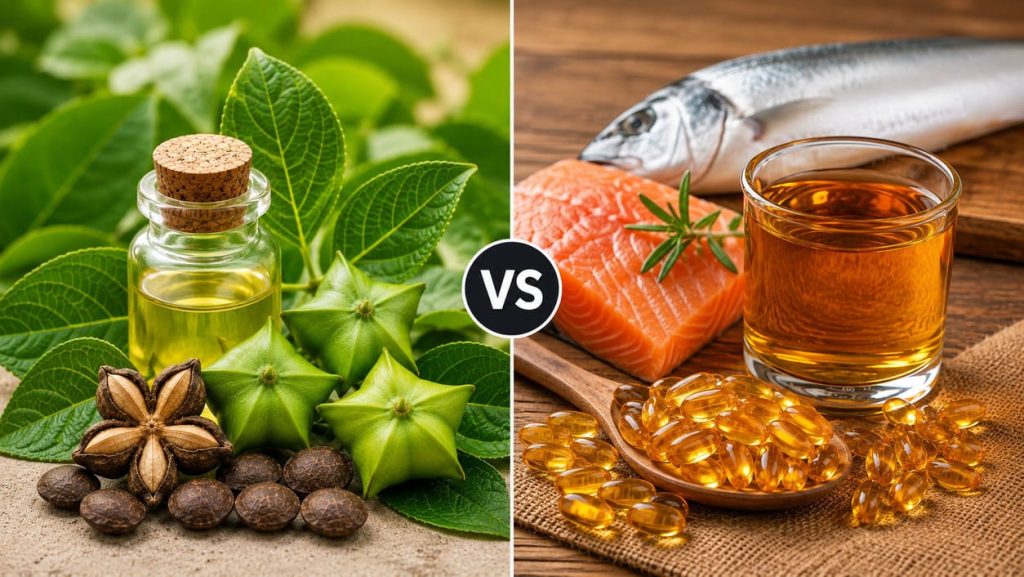
Comparison Between Sacha Inchi Oil and Fish Oil
I. The Process of Obtaining the Supplies
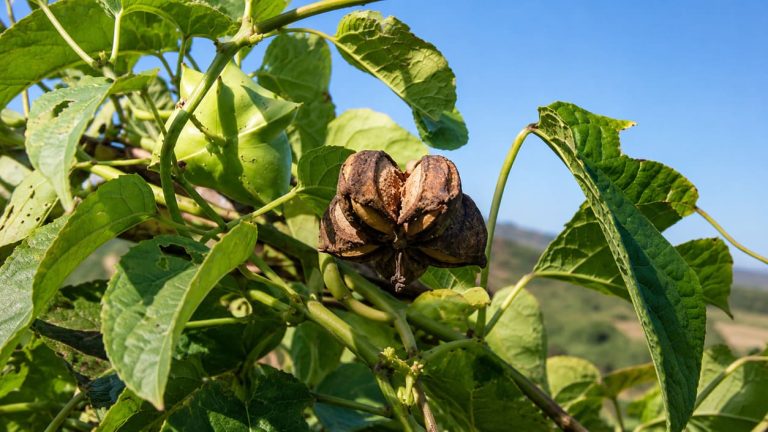
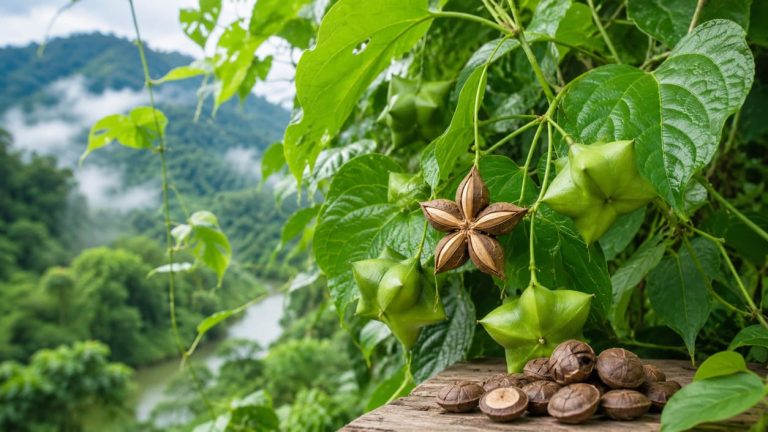
The Sacha Inchi (Plukenetia volubilis Linneo) is a seed obtained through cultivation in organic earth located in the central forest of the Peru, in medium altitudes and it implies all the corresponding agricultural works.
The required extension area is related to the amount of production that is desired to obtain. One hectare of earth produces approximately 1,000 kg of seed in the first year. Then, production increases gradually until the third year, when it reaches its maximum productivity. The first harvest is achieved after 10 months. To obtain 1 kg of oil, an average of 6 kg of seed is required.
At the moment there is little seed supply in relation to the demand; oil production does not yet reach important volumes because it is a new product, and it will take its value in the market as the demand increases and the cultivation areas expand.
Fish — usually cold-water fish — is the supply of fishmeal, and the remaining oil constitutes a sub-product which is directly encapsulated as softgels, or it is used as a base-deodorized to elaborate other products such as snacks, cookies, candies, toffees and other products that already have a widely established market.
II. Oil Obtaining Process
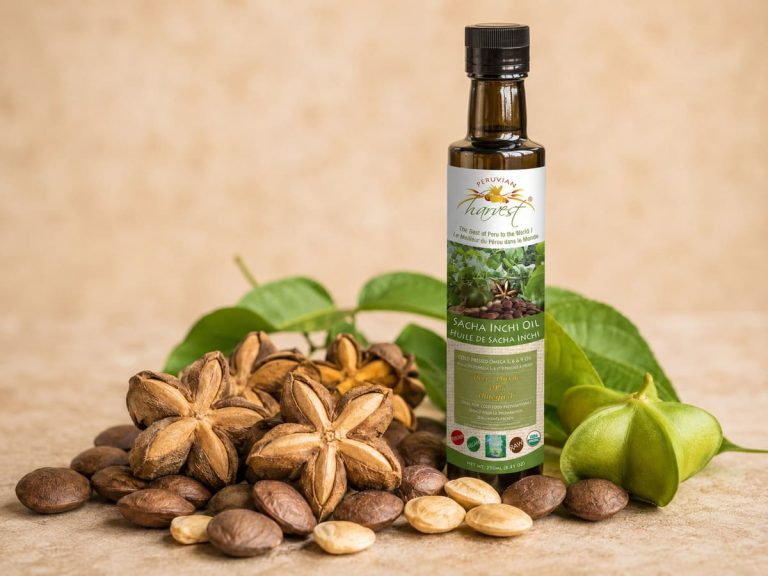
Sacha Inchi is an organic vegetable product whose content goes through a cold extraction process, allowing the human being to count on a product that enables the body to metabolize its own omegas, specifically precursor acids Omega-6, Omega-3 and Omega-9, creating a natural order.
Fish oil, having an animal origin, offers Omega-3 metabolized by the organism that acted as supplier source in the process of oil production. The source precursor is plankton.
III. Comparison Among Their Main Components
Sacha Inchi has over 47% more content of linolenic acid, the Omega-3 precursor. Fish oil has from 22% to 33% of Omega-3, with anchovy being considered among the best fish sources for Omega-3 oil.
Due to the fact that Sacha Inchi contains the precursor alpha-linolenic in superior quantity, it is able to produce more EPA and DHA (Omega 3) than any other fish and it offers an ideal combination of Omega-3 in more content, besides Omega-6 and Omega-9.
- The Sacha Inchi has 3.85% of palmitic acid and 0.0% of palmitic-oleic.
- The anchovy has 19.9% of palmitic acid and 10.5% of palmitic-oleic.
A lower content of these components is considered better for the human body.
- The Sacha Inchi has 93.69% of unsaturated fatty acids.
- The fish oils can contain from 65% to 77% of unsaturated fatty acids.
The higher percentage makes it more favourable to health.
- The Sacha Inchi has 6.4% of saturated fatty acids.
- The fish oils can contain from 22% to 35% of saturated fatty acids.
The lowest percentage of saturated fatty is considered the most healthy.
- The smell and flavor of Sacha Inchi are natural and similar to beans.
- The smell and flavor of fish oil are well known. When a person takes softgels of fish oil, they may belch the fish flavor.
The complementary process to eliminate the characteristic smell and flavor of Sacha Inchi Oil and the development of the sub-products with flavor discretion is already a reality and, slowly but in a progressive and sustained way, they will occupy a higher level in the market than those products elaborated on the basis of fish oil, due to their superior characteristics.
IV. Conclusion
This means that Sacha Inchi Oil, as a precursor source of Omega-3 with an ideal combination of Omega-6 and Omega-9 of vegetable and organic origin, allows the human being to metabolize their own Omega-3, becoming a superior health product in relation to fish oils that contain Omega-3.
Comparison Between Oleaginous Seeds, Fish, Birds and Meat
| Source | Omega 3 | Omega 6 | Alpha-Linolenic | EPA | DHA | Linoleic |
|---|---|---|---|---|---|---|
| Flax Seed | 51.00 | 15.00 | 51.00 | — | — | 15.00 |
| Colza | 10.00 | 15.00 | 10.00 | — | — | 15.00 |
| Soya bean | 8.30 | 54.50 | 8.00 | — | — | 54.50 |
| Corn | 1.00 | 58.00 | 1.00 | — | — | 58.00 |
| Peanut | 0.00 | 36.80 | 0.00 | — | — | 36.80 |
| Sesame | 0.00 | 25.00 | 0.00 | — | — | 26.00 |
| Sunflower | 0.00 | 57.90 | 0.00 | — | — | 0.00 |
| Cotton | 0.50 | 57.50 | 0.50 | — | — | 57.50 |
| Palm | 0.00 | 10.00 | 0.00 | — | — | 10.00 |
| Olive | 0.50 | 10.00 | 0.50 | — | — | 10.00 |
| Sacha Inchi | 47.02 | 37.12 | 47.02 | — | — | 37.12 |
| Anchovy | 33.40 | 2.50 | — | 18.70 | 14.70 | 1.00 |
| Sardine | 33.80 | 3.60 | — | 14.10 | 15.40 | 3.00 |
| Menhaden | 27.80 | 3.70 | — | 15.10 | 6.50 | — |
| White Fish | 35.50 | 3.40 | — | 12.00 | 19.20 | 1.00 |
| Pork | 0.70 | 9.00 | 0.70 | — | — | 9.00 |
| Poultry | 1.00 | 19.50 | 1.00 | — | — | 19.50 |
| Bovine | — | 4.00 | — | — | — | 4.00 |
| Eggs | 2.43 | 19.50 | 2.43 | — | — | 13.00 |
Amino Acids Comparison
| Amino acids | Sacha Inchi | Fish | Soya bean | Milk | Wheat |
|---|---|---|---|---|---|
| Histidine | 26.0 | 23.0 | 25.0 | 28.6 | 22.9 |
| Isoleucine | 50.0 | 49.5 | 45.0 | 52.8 | 40.0 |
| Leucine | 64.0 | 84.0 | 78.0 | 99.0 | 77.2 |
| Lysine | 43.0 | 88.2 | 54.0 | 72.4 | 22.8 |
| Methionine + cysteine | 37.0 | 30.6 | 26.0 | 35.2 | 43.8 |
| Phenylalanine + tyrosine | 79.0 | 84.9 | 80.0 | 98.2 | 78.7 |
| Threonine | 43.0 | 47.6 | 39.0 | 42.0 | 29.4 |
| Tryptophan | 29.0 | 12.0 | 13.0 | 14.2 | 11.7 |
| Valine | 40.0 | 53.0 | 48.0 | 64.3 | 45.2 |
Related Insights