
Expeller Pressed vs. Cold Pressed
A general-reading article explaining the difference between expeller pressing and cold pressing, with guidelines for selecting high-quality unrefined oils.
Cold pressed oil Expeller pressed oil Oil extraction Unrefined oils True cold pressed Organic oils
Expeller Pressed vs. Cold Pressed
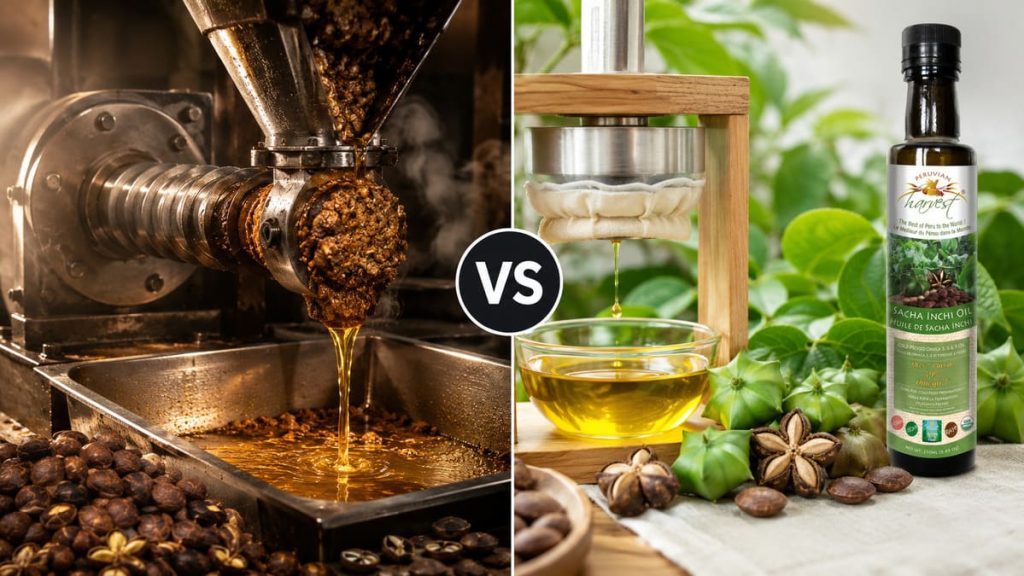
All cold pressed oils are expeller pressed. But all expeller pressed oils are not necessarily cold pressed.
What is Expeller Pressing?
Expeller pressing is a chemical-free mechanical process that extracts oil from seeds and nuts. This method of oil extraction is an alternative to the hexane-extraction method used for many conventional oils and is usually used to achieve high production volumes and productivity.
The temperature reached during pressing depends on the hardness of the nut or seed. The harder the nut or seed, the more pressure required to extract the oil, which in turn creates more friction and higher heat. There is no external heat applied during expeller pressing.
Cold Pressed?
Delicate oils, or those in which flavour or properties nuances are a key component, need to be treated with greater care in controlling processing factors.
Oils named cold pressed are in fact expeller pressed in a heat-controlled environment to keep temperatures below 120 degrees F. In Europe there are rigorous standards for cold pressing, while in North America the term has often been used loosely as a marketing technique.
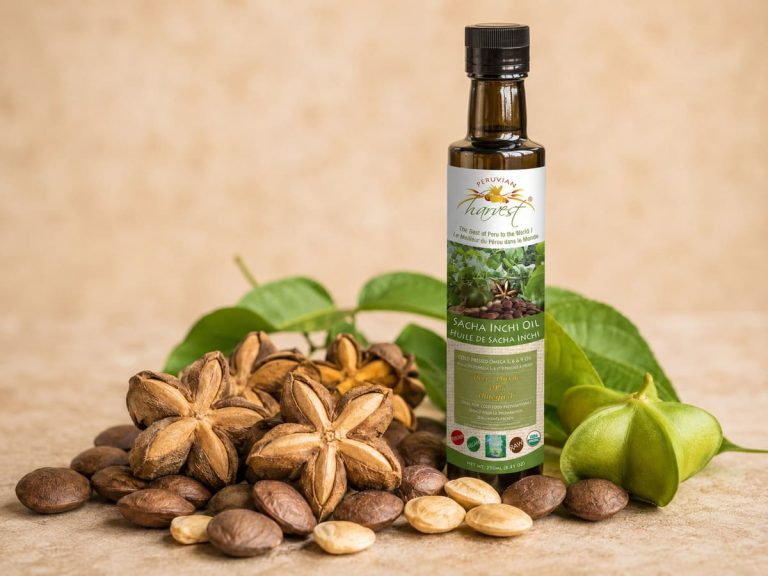
Wira® Sacha Inchi Omega Oil is a “True Cold Pressed” oil — manually and mechanically processed, with no heat used, and filtered naturally without chemical treatment or refining. By following this process, the intention is to preserve Sacha Inchi’s nutrients and benefits.
Did you know that?
The pressing of nuts and seeds to extract their precious health-sustaining oils dates back thousands of years. Egyptian civilization used oils for eating and cooking, and also for body care; so did the Romans, Greeks and Incas.
Unrefined oils have always been the cornerstone of old peoples’ diets. These oils were rich in nutrients and had individual taste, color, viscosity and unique aromas.
However, industrial oil refineries reduced many oils to bland, colorless and flat-tasting clear oils. In many places around the world, traditional methods have been maintained to produce high quality nutrient-rich unrefined oils with distinctive flavor.
Since 1978, in France, it has been legislated that virgin oils must be obtained uniquely by mechanical means and filtered naturally without any chemical treatment or refining. Good unrefined oils play a fundamental role in a balanced diet.
General guidelines for buying good healthy oils
- Always choose “first cold pressed” from a reliable producer, not a refinery.
- Certified organic if possible.
- Always in dark glass bottles: green, brown or blue. Never in clear glass bottles.
- Oils should taste delicious: fresh, clean and rich. Trust your taste.
Related Insights