

The Composition of Yacon
A general-reading reference that explains yacon’s composition, including water content, FOS, natural sugars, micronutrients, soluble fibre, fermentation in the colon, polyphenols and antioxidant-related compounds.
Yacon composition · FOS · Soluble fibre · Polyphenols · Antioxidants · Digestive function
The Composition
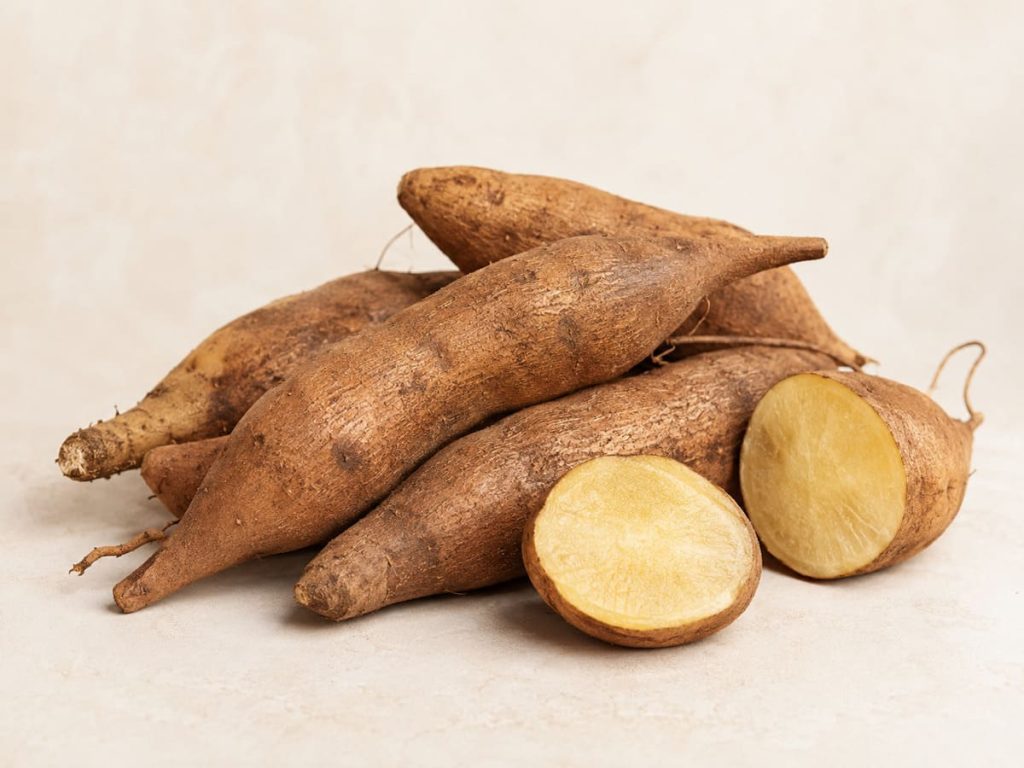
Between 85% and 90% of the fresh weight of yacon storage roots is water. In contrast to the majority of other edible roots, yacon does not store its carbohydrates in the form of starch, but rather as FOS, fructose, glucose and sucrose.
Though the percentage of the different types of sugar varies, they are of the order of magnitude, on a dry basis, of 40% to 70% FOS, 5% to 15% sucrose, 5% to 15% fructose, and less than 5% glucose.
Proteins and lipids account for just 2.4% to 4.3% and 0.14% to 0.43% of dry weight respectively. Potassium accounts for an average of 230 mg/100 g of fresh weight. Other micronutrients occur in much lower concentrations and include calcium, phosphorous, magnesium, sodium and iron.
Fructo-Oligosaccharides (FOS)
FOS are sugars that are found naturally in many types of plants, but never in concentrations as high as in the storage roots of yacon.
FOS are chemically composed of one molecule of glucose connected to between two and ten fructose molecules. The bonds that connect the molecules of fructose are able to resist the hydrolysis of enzymes in the human digestive system and are therefore able to reach the colon without being broken down and digested by the body.
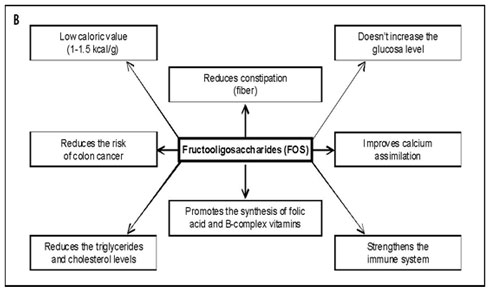
It is for this reason that FOS have a low caloric value for humans, approximately 25% to 30% of the calories possessed by other sugars.
Yacon FOS are completely fermented in the colon by probiotics, a group of beneficial bacteria that form part of the intestinal microflora. These bacteria, especially some species of the genus Bifidus and Lactobacillus, contribute to better gastrointestinal function and help to alleviate several digestive disorders.
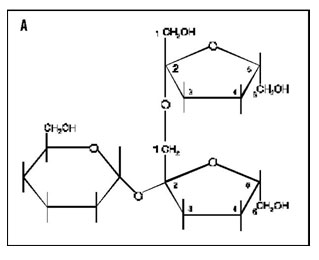
Chemical structure of 1-kestose, the simplest type of FOS, with only two molecules of fructose. The chemical structure of the rest of the FOS is similar to 1-kestose, varying only in the number of molecules of fructose that can manage to polymerize, up to 10 units.
Digestive effects associated with FOS
FOS are also recognized as a soluble fibre which causes several favourable effects during digestion:
- An increase of intestinal peristaltic movements
- A reduction in time of intestinal transit
- An increase in the amount of water retained by the fecal matter
- An osmotic effect similar to a laxative
These effects can prevent and control constipation. Other favourable health effects have also been associated with the fermentation of FOS in the colon, including:
- Strengthening the immune system
- Higher absorption of calcium by the body
- Reduction of cholesterol level
- Inhibition of the production of toxins and other carcinogenic substances in the colon
Studies have shown that the consumption of FOS does not increase the level of glucose in the blood. For this reason, several companies recommend their inclusion in the diet of diabetics as a substitute for common sugar.
Polyphenols and antioxidant compounds
In comparison with other roots and tubers, yacon contains a high level of polyphenols, accounting for approximately 200 mg/100 g of fresh weight. The most abundant polyphenols are chlorogenic acid and at least four soluble phenols derived from caffeic acid.
Other compounds reported with antioxidant activity are tryptophan, quercetin, ferulic acid and gallic acid.
Polyphenols are chemical components that have antioxidant properties, meaning that they neutralize the oxidization caused by unstable molecules known as free radicals.
Free radicals enter the body through various paths, including inhalation of tobacco smoke and atmospheric pollution as well as ingestion of pesticides and certain fats. Free radicals damage cell membranes and destroy and mutate the cell’s DNA, which can cause many health problems including an increased risk of cancer.
Free radicals are also associated with cardiovascular disease, because they cause the oxidation of LDL cholesterol, which leads to a thickening of the arteries.
Related Insights