
The Yacon Plant
A general-reading reference that describes the yacon plant, its botanical classification, common Andean names, storage roots, flavor, texture, fragility and naturally occurring fructo-oligosaccharides (FOS).
Botanical identity · Yacon roots · Andean crops · Fructo-oligosaccharides · Traditional uses
The Yacon Plant
Asteraceae
Smallanthus
S. sonchifolius
Common names: Yacon, llaqon, llacum, llacuma, yacumpi.
Yacon is a member of the sunflower family, also known as Compositae or Asteraceae. Its scientific name is Smallanthus sonchifolius, previously recognized as Polymnia sonchifolia or Polymnia edulis.
Common names used in different parts of the Andes include llaqon, llacum, llacuma, yacumpi, aricuma, chicama, jiquima and jiquimilla.
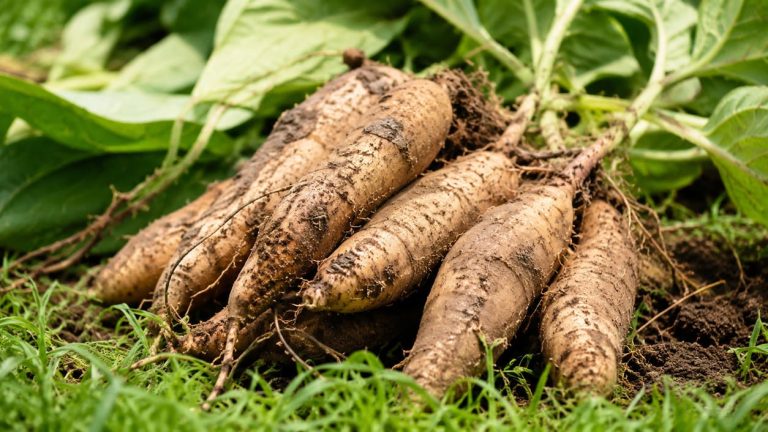
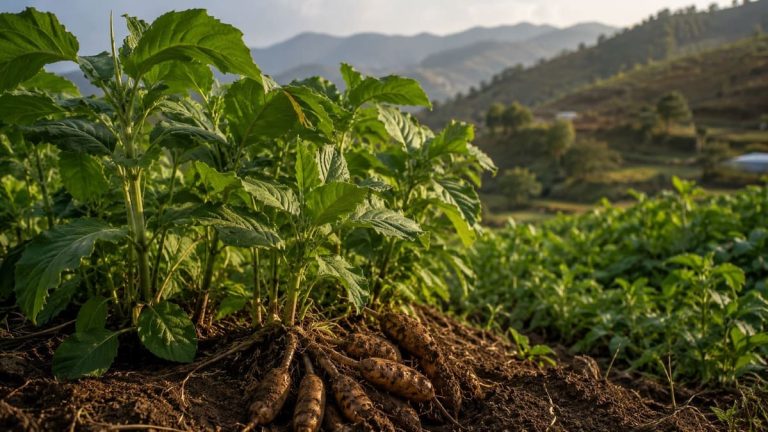
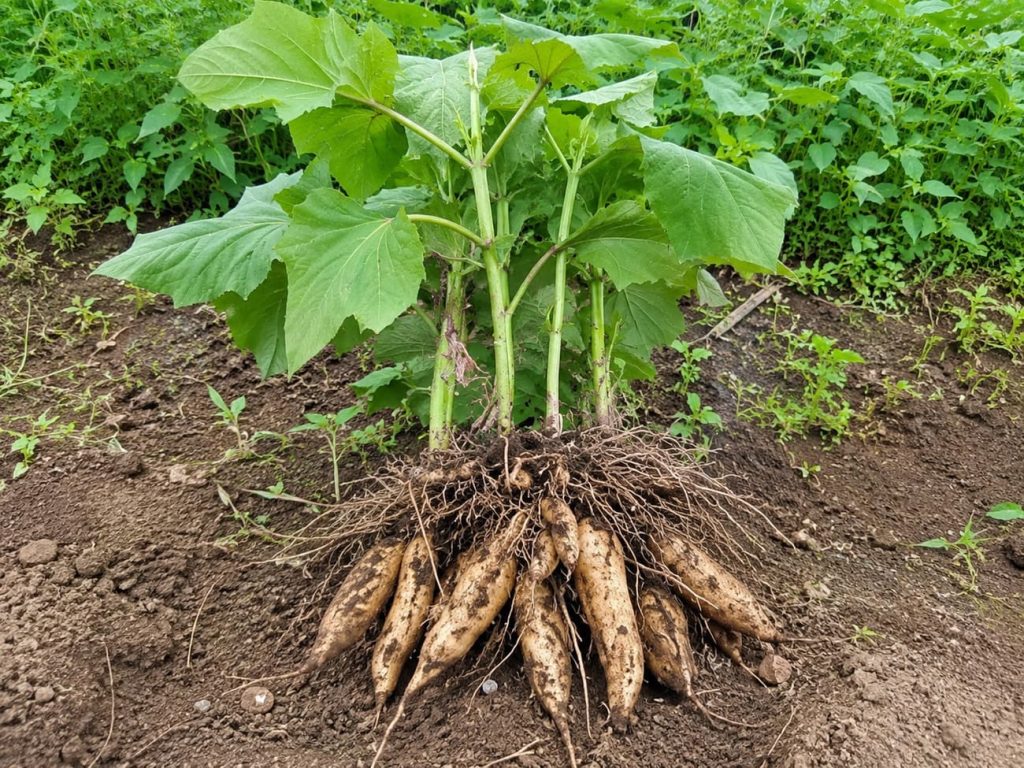
Yacon is an herbaceous perennial plant that grows between 1.5 m and 2.5 m in height. The plant produces large storage roots, also known as yacon roots, normally eaten raw from the ground like a fruit due to their pleasant and slightly sweet taste.
The roots are traditionally used by rural people as refreshment during field work, or occasionally for skin rejuvenation and to relieve intestinal, hepatic and renal disorders.
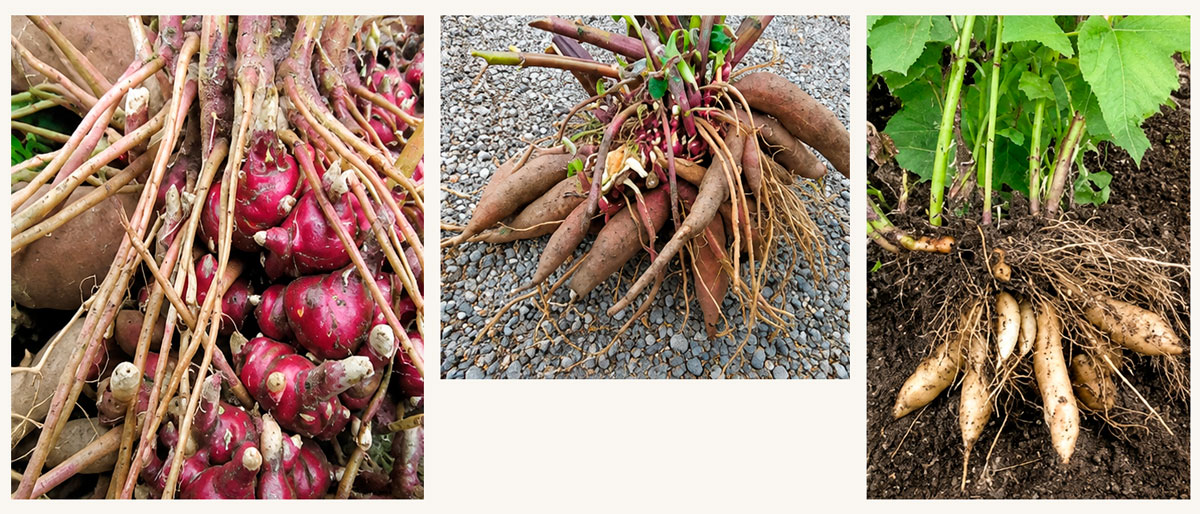
Yacon roots are delicious, crisp and sweet-tasting. Their texture and flavor have been described as a cross between a fresh apple and watermelon, which is why yacon is sometimes referred to as the “apple of the earth”.
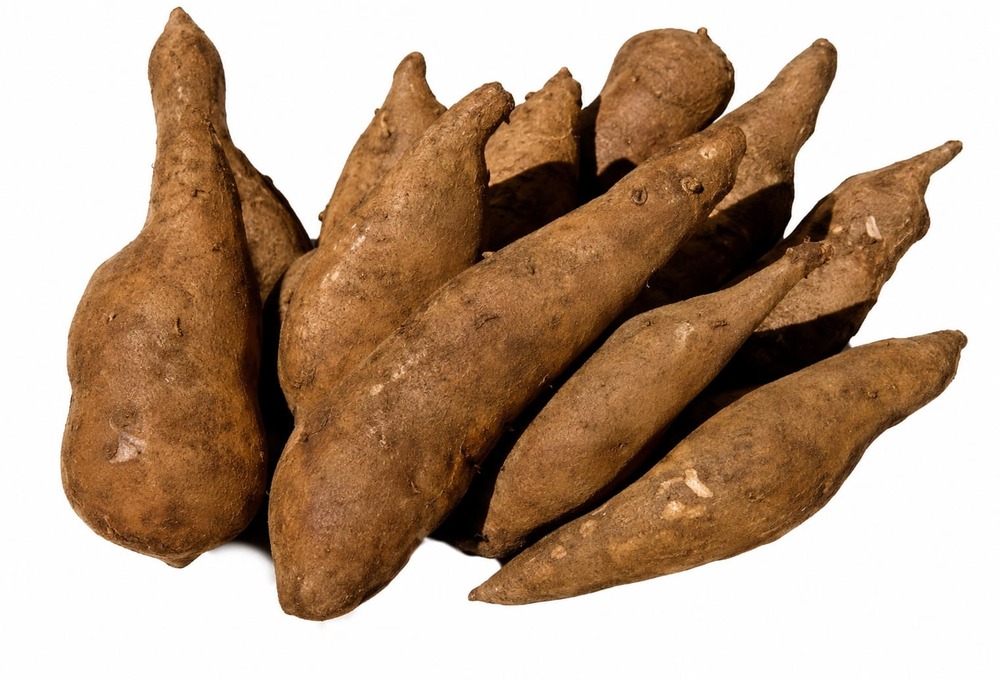
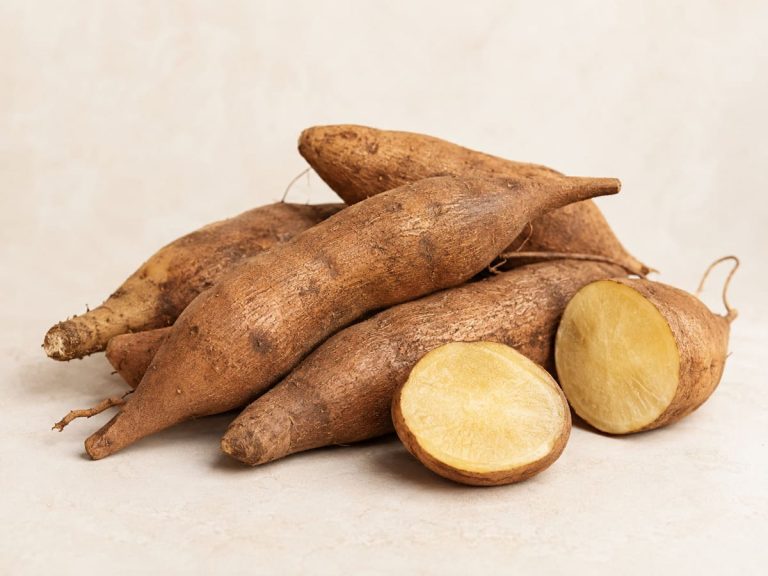
The form and size of the tuberous storage roots are similar to some varieties of sweet potato, to the point that the two species can easily be confused at first sight. Yacon roots vary in shape from spherical to lemon-shaped and inverse pear-shaped.
Commonly, the roots, though smooth, can have irregularities and deformities such as cracks and constrictions, and there are severely contorted roots that are difficult to peel. The roots have a thin skin that is firmly attached to the flesh of the tuber.
The color of the fleshy root can be cream, yellow or orange and, in some cases, can include streaks of purple. The tissue of the root is soft because it is mainly made up of water, which accounts for about 90% of the fresh weight. As a result, yacon roots are very fragile and are prone to breakage, especially during harvesting and transportation.
The root is composed mostly of water and fructo-oligosaccharides, commonly known as FOS. These edible roots contain inulin, an indigestible sugar, which means that although they have a sweet flavor, the roots contain fewer calories than would be expected.
FOS are a type of sugar with a lower caloric value than other sugar types, approximately 25% to 35% of the calories of normal carbohydrates. The consumption of FOS is also known to promote better health of the intestinal tract.
Related Insights