
What You Need to Know About Maca
A general educational document about the endocrine system and hormonal regulation, with sections addressing female and male menopause, fertility, hypothyroidism, osteoarthritis, and fibromyalgia. It is a general-reading resource and not a clinical study of maca.
Endocrine system · Hormonal regulation · Female menopause · Male menopause · Fertility · Hypothyroidism · Osteoarthritis · Fibromyalgia

Hormonal Balance and Related Issues
Hormones are chemical messengers that regulate many of the body’s most important functions, including metabolism, mood, growth, reproduction, stress response and general vitality. For this reason, hormonal balance is closely connected with overall well-being.
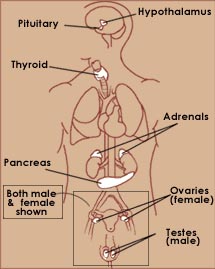
The major glands that make up the human endocrine system include the hypothalamus, pituitary, thyroid, parathyroid, adrenal glands, pineal body and the reproductive glands, which include the ovaries and testes. The pancreas also forms part of this hormone-secreting system, even though it is also associated with digestive processes.
Although the endocrine glands are the body’s main hormone producers, other non-endocrine organs such as the brain, heart, lungs, kidneys, liver, thymus, skin and placenta also produce and release hormones.
The hypothalamus and pituitary connection
The hypothalamus, a collection of specialized cells located in the lower central part of the brain, forms a primary link between the endocrine and nervous systems. Nerve cells in the hypothalamus help regulate the pituitary gland by producing releasing hormones and inhibiting hormones that influence pituitary function.
The pituitary gland is often described as the “master gland” because it influences many other endocrine glands. It produces hormones that regulate growth, reproduction, metabolism and water balance, and it helps coordinate signals throughout the endocrine system.
Major glands
- Hypothalamus
- Pituitary gland
- Thyroid gland
- Parathyroid glands
- Adrenal glands
- Pineal body
- Ovaries and testes
- Pancreas
Functions commonly influenced by hormones
- Metabolism
- Energy regulation
- Mood and emotional balance
- Growth and development
- Stress response
- Fertility and sexual health
- Sleep patterns
- General vitality
Thyroid and metabolism
The thyroid gland plays a central role in metabolism by helping regulate how the body uses energy. Thyroid hormones influence many processes, including temperature regulation, weight balance, energy use and the speed of multiple metabolic functions.
Because metabolism affects every cell in the body, disturbances in thyroid function may be reflected in fatigue, changes in weight, intolerance to cold, sluggishness, mood changes and other general symptoms.
Adrenal glands and stress response
The adrenal glands help the body respond to stress and support balance through hormones such as cortisol and adrenaline. These glands play an important part in how the body handles both physical and emotional stress.
When the stress response becomes prolonged or imbalanced, people may experience tiredness, irritability, reduced resilience, sleep changes or a general sense of low vitality.
Pancreas and blood sugar regulation
The pancreas contributes to hormonal balance through the production of insulin and glucagon, hormones that regulate blood sugar levels. Stable blood sugar is closely linked with energy, mood and overall metabolic balance.
Reproductive glands
The ovaries and testes produce hormones involved in reproductive health, sexual development and sexual function. Changes in the production of these hormones over time may be associated with life stages such as menopause, andropause and fertility-related concerns.
General perspective
Hormonal balance does not depend on a single organ, but on the coordinated work of multiple glands and signaling pathways. Because of this, disturbances in one part of the endocrine system may affect many areas of health and well-being.
Female Menopause
Menopause is a natural transition in a woman’s life associated with significant hormonal changes, especially in estrogen and progesterone levels. These changes may affect many aspects of physical and emotional well-being.
As ovarian function changes over time, women may experience a variety of symptoms and shifts in general well-being. The timing and severity of menopause-related symptoms can vary considerably from person to person.
Commonly discussed symptoms
- Hot flashes
- Night sweats
- Mood changes
- Sleep disturbances
- Low energy
- Vaginal dryness
- Changes in libido
- Weight changes
Areas often affected
- Emotional balance
- Stress tolerance
- Sexual well-being
- Bone health
- Sleep quality
- Energy levels
- General comfort and vitality
Hormonal transition
Menopause is associated with a decline in ovarian hormone production, especially estrogen and progesterone. Because these hormones influence many systems in the body, symptoms may be experienced in multiple ways, from temperature regulation and sleep patterns to mood and sexual comfort.
Quality of life considerations
The menopausal transition may affect daily quality of life, especially when symptoms such as hot flashes, interrupted sleep or changes in emotional balance become persistent. Supportive approaches often focus on comfort, balance and general wellness during this stage.
Discussion around hormone replacement therapy
Menopause is frequently discussed in connection with hormone replacement therapy (HRT). At the same time, many women also explore broader nutritional, lifestyle and wellness-oriented approaches to support balance during this stage of life.
This section presents menopause as an area in which endocrine balance, stress response, sleep quality, vitality and general well-being are closely interrelated.
Important perspective
Menopause is a natural life stage, but its symptoms and effects can differ greatly among individuals. What is mild for one person may be significantly disruptive for another.
Male Menopause
Male menopause, often discussed in relation to age-related hormonal changes in men, is commonly associated with shifts in vitality, mood, sexual function and overall well-being.
Unlike the more defined hormonal transition associated with female menopause, hormonal changes in men are often described as more gradual. These changes may involve testosterone and other endocrine factors and can affect how a person feels physically and emotionally over time.
Commonly associated changes
- Lower energy
- Reduced stamina
- Changes in sexual desire
- Changes in erectile response
- Mood changes or irritability
- Less motivation
- Reduced sense of vitality
- Sleep-related changes
Hormonal context
Age-related hormonal changes in men are often discussed in connection with endocrine balance, especially as it relates to sexual function, emotional well-being, muscular tone, motivation and general vitality.
Because hormones interact with multiple body systems, these changes may not be experienced only as sexual symptoms, but also as changes in energy, mood, resilience and overall quality of life.
Areas often discussed
- Libido
- Vitality
- Emotional balance
- Energy levels
- Stress tolerance
- Physical stamina
Broader wellness perspective
Male hormonal changes are often discussed not as an isolated condition, but as part of a larger picture involving aging, lifestyle, endocrine balance and overall health.
Aging and well-being
In discussions around male menopause, healthy aging is often linked with preserving vitality, maintaining balance in hormonal function and supporting general physical and emotional well-being.
Fertility
Fertility depends on a combination of factors in both men and women. From a medical standpoint, a couple is often considered infertile if pregnancy has not occurred after one or two years of unprotected sexual intercourse.
To be fertile, both the male and female reproductive systems must be functioning properly. A number of clinical conditions and diseases can be responsible for male infertility, including mumps, smallpox, viral infections, sexually transmitted diseases, testicular injury, environmental toxins, drugs, alcohol, tobacco, hormonal imbalance, vasectomy, testicular obstruction, spinal cord lesions, genetics, cystic fibrosis, general sexual dysfunction and other possible causes.
Sometimes, in spite of the most meticulous search, no obvious cause can be found for the infertility.
Infertility in women can also be caused by a variety of medical conditions. These may include failure to ovulate, hormonal imbalances that leave the uterine lining unprepared for implantation of the embryo, abnormalities of the uterus, scar tissue from infections in the fallopian tubes, ovaries or uterus, inadequate cervical mucus, production of anti-sperm antibodies, or habitual miscarriage.
Endometriosis, uterine fibroids or uterine polyps can also inhibit conception and implantation.
Male fertility factors
- Viral infections
- Sexually transmitted diseases
- Testicular injury
- Environmental toxins
- Alcohol and tobacco
- Hormonal imbalance
- Testicular obstruction
- Genetic factors
- General sexual dysfunction
Female fertility factors
- Failure to ovulate
- Hormonal imbalances
- Uterine abnormalities
- Scar tissue from infections
- Inadequate cervical mucus
- Anti-sperm antibodies
- Habitual miscarriage
- Endometriosis
- Uterine fibroids or polyps
In both cases, one of the first areas to look at is hormonal imbalance.
Hypothyroidism
Hypothyroidism is a condition in which the body lacks sufficient thyroid hormone. Since the main purpose of thyroid hormone is to help “run the body’s metabolism,” people with this condition often experience symptoms associated with a slow metabolism.
Over five million Americans have this common medical condition; in fact, as many as ten percent of women may have some degree of thyroid hormone deficiency. Hypothyroidism is more common than many people believe, and millions of people may be hypothyroid without knowing it.
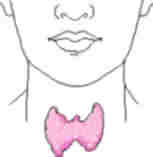
How Your Thyroid Works
The thyroid gland is a small gland, normally weighing less than one ounce, located in the front of the neck. It is made up of two halves, called lobes, that lie along the windpipe, or trachea, and are joined together by a narrow band of thyroid tissue known as the isthmus.
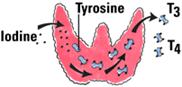
The thyroid is situated just below the Adam’s apple or larynx. During development inside the womb, the thyroid gland originates in the back of the tongue, but it normally migrates to the front of the neck before birth. Sometimes it fails to migrate properly and is located high in the neck or even in the back of the tongue, known as lingual thyroid. This is very rare. At other times, it may migrate too far and end up in the chest, which is also rare.
The function of the thyroid gland is to take iodine, found in many foods, and convert it into thyroid hormones: thyroxine (T4) and triiodothyronine (T3).
Thyroid cells are the only cells in the body that can absorb iodine. These cells combine iodine and the amino acid tyrosine to make T3 and T4. T3 and T4 are then released into the bloodstream and transported throughout the body, where they help control metabolism, the conversion of oxygen and calories to energy.
Every cell in the body depends upon thyroid hormones for regulation of metabolism. The normal thyroid gland produces about 80% T4 and about 20% T3; however, T3 possesses about four times the hormone strength of T4.
A delicate feedback mechanism
The thyroid gland is under the control of the pituitary gland, a small gland the size of a peanut at the base of the brain. When the level of thyroid hormones (T3 and T4) drops too low, the pituitary gland produces Thyroid Stimulating Hormone (TSH), which stimulates the thyroid gland to produce more hormones.
Under the influence of TSH, the thyroid manufactures and secretes T3 and T4, raising their blood levels. The pituitary senses this and responds by decreasing its TSH production. One can imagine the thyroid gland as a furnace and the pituitary gland as the thermostat.
Thyroid hormones are like heat. When the heat gets back to the thermostat, it turns the thermostat off. As the room cools, meaning thyroid hormone levels drop, the thermostat turns back on and TSH increases, stimulating the furnace to produce more heat, or thyroid hormones.
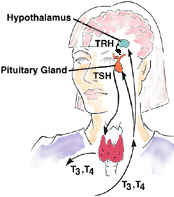
The pituitary gland itself is regulated by another gland known as the hypothalamus. The hypothalamus is part of the brain and produces TSH Releasing Hormone (TRH), which tells the pituitary gland to stimulate the thyroid gland and release TSH.
One might imagine the hypothalamus as the person who regulates the thermostat, since it tells the pituitary gland at what level the thyroid should be set.
Remember
Hypo = too little
Thyroidism = disease of the thyroid
Hypothyroidism = a disease of too little thyroid activity.
Common causes of hypothyroidism
There are two common causes of hypothyroidism. The first is previous or ongoing inflammation of the thyroid gland, which leaves a large percentage of thyroid cells damaged or dead and incapable of producing sufficient hormone. The most common cause of thyroid gland failure is autoimmune thyroiditis, also called Hashimoto’s thyroiditis, a form of thyroid inflammation caused by the patient’s own immune system.
The second major cause is the broad category of medical treatments. The treatment of many thyroid conditions may involve surgical removal of a portion or all of the thyroid gland. If the total mass of thyroid-producing cells left within the body is not enough to meet the body’s needs, the patient will develop hypothyroidism.
In surgery for thyroid cancer, this is often the goal of treatment. In other cases, surgery may remove a worrisome nodule while leaving half of the thyroid in the neck undisturbed. Sometimes the remaining thyroid lobe and isthmus will produce enough hormone, while in other patients it may become apparent years later that the remaining thyroid cannot quite keep up with demand.
Similarly, goiters and some other thyroid conditions can be treated with radioactive iodine therapy. The aim of radioactive iodine therapy for benign conditions is to kill a portion of the thyroid to prevent goiters from growing larger or producing too much hormone, known as hyperthyroidism. Occasionally, the result of radioactive iodine treatment is that too many cells are damaged and the patient becomes hypothyroid a year or two later.
There are several other rare causes of hypothyroidism, one of them being a completely normal thyroid gland that is not making enough hormones because of a problem in the pituitary gland. If the pituitary does not produce enough Thyroid Stimulating Hormone (TSH), then the thyroid simply does not have the signal to make hormone.
Symptoms of Hypothyroidism
- Fatigue
- Weakness
- Weight gain or increased difficulty losing weight
- Coarse, dry hair
- Dry, rough, pale skin
- Hair loss
- Cold intolerance
- Muscle cramps and frequent muscle aches
- Constipation
- Depression
- Irritability
- Memory loss
- Abnormal menstrual cycles
- Decreased libido
Each individual patient may have any number of these symptoms, varying with the severity of the thyroid hormone deficiency and the length of time the body has been deprived of the proper amount of hormones. Some patients may have one symptom as their main complaint, while another may experience a different symptom. Most will have a combination of several symptoms.
Occasionally, some patients with hypothyroidism have no symptoms at all, or the symptoms are so subtle that they go unnoticed.
Hypothyroidism can often be diagnosed with a simple blood test. In some persons, however, it is not so simple and more detailed tests may be needed. Most importantly, a good relationship with an endocrinologist may be needed.
Potential Dangers of Hypothyroidism
Because the body is expecting a certain amount of thyroid hormone, the pituitary will make additional Thyroid Stimulating Hormone (TSH) in an attempt to entice the thyroid to produce more hormone. This constant bombardment with high levels of TSH may cause the thyroid gland to become enlarged and form a goiter, sometimes called a compensatory goiter.
Left untreated, the symptoms of hypothyroidism will usually progress. Rarely, complications can result in severe life-threatening depression, heart failure or coma.
Osteoarthritis
What is Osteoarthritis?
The word arthritis literally means “joint inflammation”: a joint that may be painful, warm to the touch, possibly red, swollen and associated with loss of function. “Osteo” is Greek for “bone.”
Arthritis is not a single ailment. More than 100 different conditions can affect the joints and their adjacent bones, muscles and tissues. They are classified into various major types of arthritis, depending on whether inflammation, infection or bleeding is the major component.
Osteoarthritis (OA) is the most common form of arthritis. It is often described as a non-inflammatory type of arthritis, meaning inflammation is not the key component. Osteoarthritis develops in a joint when cartilage, the smooth shiny tissue that lines and cushions the ends of bones inside a joint, begins to break down.
This can happen from prolonged wear-and-tear as we age, prior injury or damage to the joint from trauma or infection, or cartilage that is altered by other disease or is genetically weak.
In most cases, it is impossible to know exactly what causes it. Damaged cartilage cannot heal to become normal again. Osteoarthritis can involve a number of joints, but it is not a disease that spreads to involve other tissues or joints throughout the body.
How it progresses
- The smooth cartilage that lines and protects the bone ends begins to retain water, and changes occur in some of the chemical substances that make up the cartilage.
- Tiny cracks develop in the cartilage, which then splits further, forming clefts.
- The ends of the bones begin to thicken and grow out from the joint margin. These small bone growths are called osteophytes or “spurs.”
- Cysts, which are small cavities, develop in the bone just beneath the damaged cartilage.
- Fragments of damaged cartilage or bone may break off and float freely in the joint as loose bodies and may cause additional problems.
- As the cartilage becomes more damaged, the joint space becomes narrower.
- The erosion of cartilage can irritate and inflame the inner lining of the joint, called the synovial membrane, causing it to produce excess fluid.
When the cushioning system of the joint is lost, the bones may grind painfully against each other. The joint can begin to stiffen, and movement is impaired. Some people, however, may have severe osteoarthritis changes in a joint and experience very little or no pain.
Commonly affected joints
- Weight-bearing joints, such as knees, hips, back and feet
- Hands
- Spine
The knee is the most commonly affected joint. If osteoarthritis develops in the hips or knees, it often occurs in only one joint but may affect any number of joints. If the hands are affected, several finger joints may become arthritic at the same time.
Facts about Osteoarthritis
- Osteoarthritis is commonly associated with aging and can affect any joint.
- It is one of the oldest discovered health problems, having been found in dinosaur joints and Egyptian mummies.
- Osteoarthritis is the most widespread form of arthritis.
Nutrition and Osteoarthritis
Bones and cartilage depend on biological processes influenced by hormones and nutrition. Over time, some changes associated with aging may contribute to joint aches, bone density loss and related concerns. Menopause may also trigger or enhance some of these problems.
This section presents osteoarthritis as part of a broader discussion about aging, hormones, nutrition and general structural health.
Fibromyalgia
Fibromyalgia is commonly described as a chronic condition involving widespread pain, tenderness and a range of symptoms that may affect sleep, energy, mood and daily quality of life.
The condition has often been discussed in relation to fatigue, muscle pain, tender points, sleep disturbances and overlapping symptoms with other conditions. Because of this overlap, diagnosis can be difficult and may take time.
How is it diagnosed?
The referenced material explains that there are no laboratory tests available for diagnosing fibromyalgia. Doctors must rely on patient histories, self-reported symptoms, a physical examination and an accurate manual tender point examination.
This exam is based on standardized criteria. Proper implementation of the exam determines the presence of multiple tender points at characteristic locations.
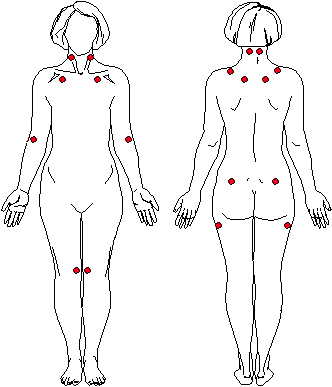
It is estimated that it takes an average of five years for a fibromyalgia patient to obtain an accurate diagnosis. Many doctors are still not adequately informed or educated about fibromyalgia. Laboratory tests often prove negative, and many symptoms overlap with those of other conditions, leading to extensive investigative costs and frustration for both doctor and patient.
Another essential point that must be considered is that the presence of other diseases, such as rheumatoid arthritis or lupus, does not rule out a fibromyalgia diagnosis. Fibromyalgia is not a diagnosis of exclusion and must be diagnosed by its own characteristic features.
Related Insights